Choose the material.
Define the finish.
Compare common metals and surface options for your part. Final grade, finish and inspection scope are confirmed against the drawing and operating conditions.
Compare metals
before you specify.
This is a starting point for a drawing review. Material performance depends on the exact grade, environment and manufacturing route.
| Material | Common reason to choose it | What to confirm in the RFQ |
|---|---|---|
| 303 stainless | Parts where machinability is a priority and the application permits a free-machining stainless grade. | Exact alloy, application, material record, finish and any restriction on sulfur-bearing grades. |
| 304 stainless | General machined parts that need a clean, corrosion-resistant surface. | Exact grade, environment, magnetic or forming requirements and finish. |
| 316 / 316L stainless | Parts that need more corrosion resistance than 304 in many environments. | 316 or 316L, exposure, required documentation, machining and finished surfaces. |
| 904-series stainless | More demanding corrosive environments where the higher alloy content is justified. | Exact grade, stock availability, documentation, machining route, cost and delivery. |
| Brass or copper | Decorative, conductive or bearing-related components. | Exact alloy, any restricted-content requirement, finish and color. |
| Titanium | Lightweight parts for demanding engineering or medical applications. | Alloy and condition, machining method, inspection and application scope. |
| Iron | Project-specific hardware where iron is called out by the drawing. | Grade, coating, performance requirements and inspection. |
Outside these metals? Send the specification before quoting so the process scope can be checked.
Choose the finish
by appearance and use.
Finish names alone leave too much room for interpretation. State the area, method and an agreed reference.
| Finish | What it changes | Define in the RFQ |
|---|---|---|
| Polishing | Visual reflectivity and smoothness on selected surfaces. Hand polishing can be completed in-house. | Visible faces, mirror or satin target, edge care and reference sample. |
| Brushing | Directional grain and a controlled satin appearance. Brushing can be completed in-house. | Grain direction, line density, surface areas and masking. |
| Sandblasting | A uniform matte texture for visual or preparation purposes. Blasting can be completed in-house. | Media, roughness target, coverage and areas to protect. |
| PVD or plating | Color, surface appearance and an added surface layer, coordinated with qualified finishing partners where required. | Color reference, use environment, masking, process route and acceptance criteria. |
| Engraving or etching | Markings, lettering or decorative texture on the part. | Artwork, depth, placement, legibility and surface finish. |
| Stone setting | Specified stones set into prepared seats on defined faces, coordinated to the confirmed project route. | Stone type and size, seat geometry, retention check, partner scope and visible finish. |
Specify the surface
by area and method.
Machining and inspection are handled in our Dongguan workshop. Polishing, brushing, blasting and engraving can be completed in-house. PVD, plating and stone setting are coordinated with qualified finishing partners where required. The drawing sets the visible faces, final method and acceptance reference.
- High-appearance stainless, brass and titanium
- In-house hand polishing, brushing, blasting and engraving
- PVD, plating and stone setting coordinated to confirmed project scope
- Surface review before final packaging
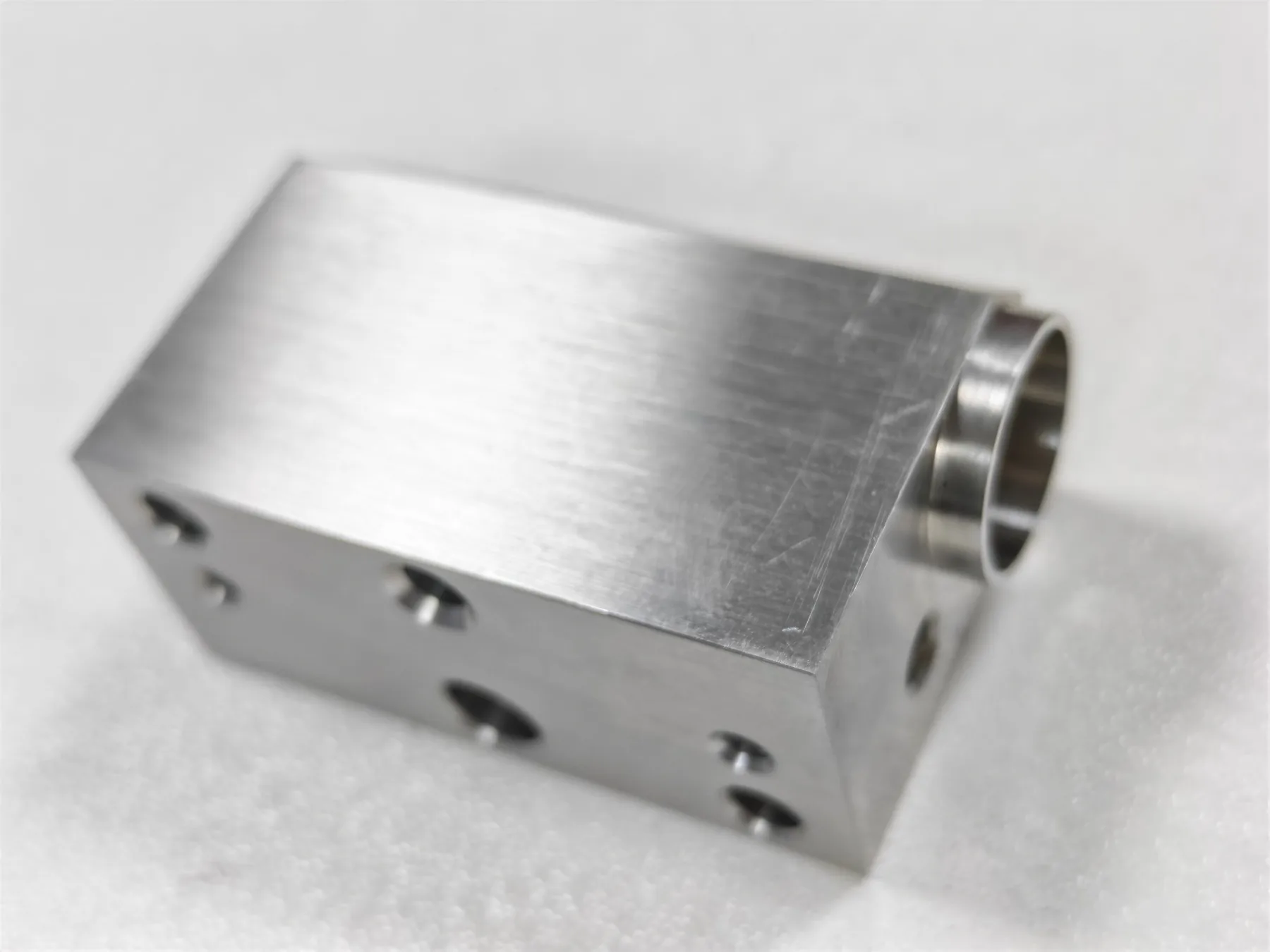
Material choice tied to a real application.
The photographed part is a confirmed 316 stainless steel component made for liquid cooling. It gives buyers a concrete reference for the kind of multi-face machining and threaded connection work we can review.
- Material and grade confirmed per customer specification
- Multiple ports and internal threads machined to drawing
- Surface, sealing and mating requirements reviewed per project
- No unsupported pressure or system-performance claim
Describe the surface
so quotes compare.
A short finish note with three parts gives the factory enough information to review method and scope.
Name the faces, edges or features that need finishing, and state what stays as machined.
Use one method and add a reference sample or photo where appearance is critical.
For color work, provide a RAL, Pantone or physical sample. For brushing, state direction and density.
Ready to review your drawing?
Send part type, material, quantity, finish and target date. We reply with manufacturability and a clear next step.